



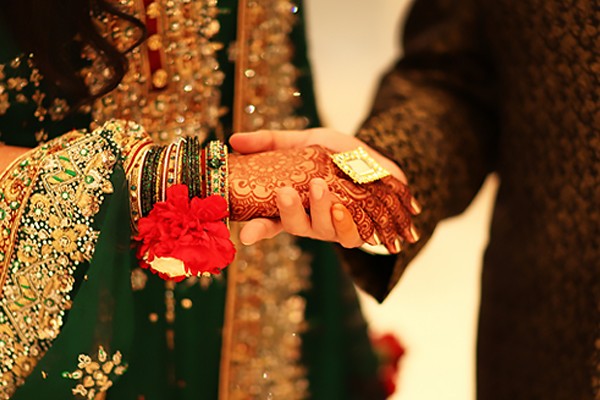
Islamic Wedding Rituals | images. weddingplz.com
Muslim couples all over the world prefer to hold their weddings strictly abiding by the rules mentioned in the Holy Quran. There are several wedding rituals that are diligently observed in all Islamic weddings. Millions of Muslim couples follow these rituals with the help of their families while tying the marital knot. Some of these rituals are conducted before the wedding and some are done after the main wedding ceremony. In many Muslim wedding invitations, the dates and times of these rituals are also mentioned for the convenience of wedding guests.
Salatul Ishtikara – This pre-wedding ritual is the official announcement of Muslim marriage in the presence of families of both bride and groom. The Imam of the local mosque reads out prayers from the Holy Quran and blesses the couple. However, many modern Muslim couples choose to skip this ritual now.
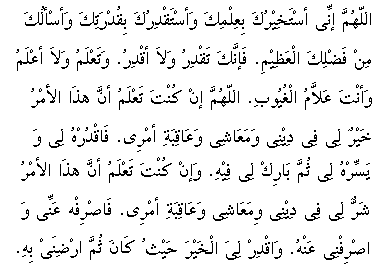
Salatul Ishtikara | images. files.wordpress.com
Imam Zamin – This is the second pre-wedding ritual where the groom’s mother visits the bride’s place and blesses her with gifts. Usually, she brings a gold or silver chain that is wrapped in a silk scarf and ties it to the bride’s wrist. She also brings sweets and other gifts for the bride’s family.
Mangni – This is the official engagement party of a Muslim couple. The bride and groom exchange rings with each other, in the presence of their families and friends, announcing their betrothal. Both families also exchange gifts to celebrate this pre-wedding function.

Mangni | images. i.pinimg.com
Manjha – This Muslim pre-wedding ritual is somewhat similar to the Haldi ceremony of Hindus. It occurs two days before the scheduled wedding date. Both the bride and groom wear bright yellow attires for this occasion, waiting to be smeared with the paste of turmeric and sandalwood in rosewater. The groom’s family sends this paste to the bride. They take a bath with the holy water after which they cannot leave the house till their marriage ceremony.

Manjha | images. i.ytimg.com
Mehendi – This ritual is held at the bride’s place in the presence of her family and female friends, only a day before the wedding. Artistic designs are made with henna paste on the hands and feet of the bride, preferably by a professional Mehendi artist. Usually, the initials of the groom’s name are hidden within the designs done on her palms, which the groom must find on the wedding night.

Mehendi | images. i.pinimg.com
Sanchaq – Male family members of the groom visit the bride with the bridal dress, jewelry, other accessories, and sweets before the wedding. They bless her with these gifts and promise their support and affection in her new life.
Baraat arrival – The groom is taken to the wedding venue by his family members and male friends in a grand procession, accompanied by dance, music, and fireworks. They are welcomed by the bride’s family when they arrive at the doorstep of the wedding venue. The bride’s brother has a welcome drink with the groom where only tasty sherbet is served. Then rosewater is sprinkled on the groom and his associates while leading them to the wedding venue.
Nikah ceremony – The wedding ceremony is termed Nikah, which is an Arabic word for marriage as mentioned in the Islamic Holy Scripture. This ceremony is conducted by a Qazi or priest from a local mosque. The bride and groom sit in separate enclosures, the bride surrounded by her female relatives and the groom surrounded by his male companions. The father of the bride acts as her Wali or guardian.

Nikah Ceremony | images. i1.wp.com
The groom’s family offers Mehar or dowry to the bride and seeks her consent to this marriage. The Qazi then asks both bride and groom whether they are accepting the other one as their life partner. Once both reply by saying ‘Qubool Hai’ thrice to agree to their marriage proposal, the Qazi reads Nikah Nama from the Holy Quran that states the duties of a husband and wife. Then the new couple signs a document with all the terms and conditions to be fulfilled for a successful marriage, along with the signs of two witnesses from each side.
Finally, the Qazi recites Khutba from the Holy Quran and the marriage ceremony is completed when the elders bless the new couple, called Durud. Then the groom is led to his bride where he pays money to the sisters of the bride. The bride and groom look at each other through a mirror by placing a Quran between them and this ritual is called Arsi Mushraf, which is held after a post-wedding lavish dinner.
Rukhsat – This is a post-wedding ritual where the bride leaves her maternal home to be with her husband in her in-laws’ house. The bride’s father gives her hand to her groom, asking him to take good care of her all the time. The bride is welcomed by her mother-in-law by holding a Quran over her head while she crosses the threshold of her new home, to obtain divine blessings for her married life and to remind her of the duties of a loyal wife.
Walima – This is the post-wedding reception party organized by the groom’s family. All relatives and friends of both families are invited to this party so that they can enjoy themselves together. They shower the new couple with gifts and blessings, after which all can relish a grand feast together.
Chauthi – The bride returns to her parent’s home with her husband, 4 days after their wedding. The new couple is heartily welcomed there with affection and they receive lots of gifts from the bride’s family. They are entertained with a lavish dinner and they may stay there for a night before returning to the groom’s home.
Most pre-wedding and post-wedding rituals of Muslims have a unique touch that sets them apart from the wedding rituals and traditions of other religions. However, there are also some similarities among wedding rituals of Muslims and people following other religions, like the engagement, smearing turmeric paste, and wedding reception. Wedding guests are invited to attend many of these rituals through Muslim wedding invitations while some are attended only by the family members of the new couple.


Please complete your information below to login.
Sign In
Create New Account