



The contrast between Indian weddings held in the USA and those in India is noteworthy, with each displaying unique characteristics. Indian weddings in the US have undergone a transformation by incorporating aspects of Western culture that resonate with the diaspora.
In this article, we will explore some of the distinctions between Indian weddings celebrated in the USA and India. This guide aims to provide insights into the customs and norms, offering assistance in planning and organizing your own wedding.
Indian wedding cards in India and the USA
Indian Wedding Cards in India:
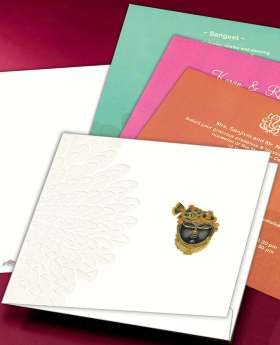
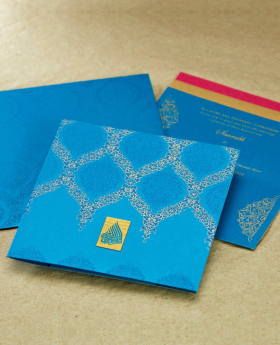
1. Intricate Designs: Indian wedding cards are known for their ornate and intricate designs. They often feature traditional motifs, intricate patterns, and vibrant colours, reflecting the rich cultural heritage of India.
2. Religious Symbols: Indian wedding invitation card designs in India typically include religious symbols and auspicious elements like the "Om" symbol, Lord Ganesha, or a representation of the auspicious "Swastika."
3. Multiple Functions: Indian weddings often consist of multiple events and ceremonies, each with its unique significance. As a result, the wedding cards may be elaborate and include details of various functions like Mehendi, Sangeet, Haldi, and the main wedding ceremony.
4. Family Names: Indian wedding cards usually mention the names of the bride's and groom's parents and families, emphasizing the importance of family ties and lineage.
5. Regional Diversity: India's diverse cultural landscape results in a wide variety of wedding card styles, reflecting regional customs and traditions.
Indian Wedding Cards in the USA:
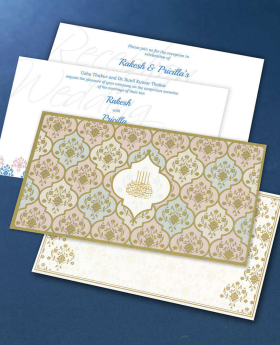
1. Simplified Designs: While Indian wedding cards in the USA may retain some cultural elements, they often have simpler designs compared to their counterparts in India. This is because they are designed to cater to a diverse audience with varying cultural backgrounds.
2. The blend of Cultures: Indian wedding cards in the USA may incorporate a blend of Indian and Western elements, reflecting the multicultural nature of Indian-American weddings.
3. Compact Format: Given that Indian-American weddings may not involve as many events as traditional Indian weddings, the cards are more concise and focused on the main ceremony details.
4. Personalization: In case of digital wedding cards, Couples may choose to add personal touches to the Indian wedding card designs online, reflecting their individual preferences and tastes.
5. Online Invitations: In the USA, electronic invitations have gained popularity, offering a more environmentally friendly and cost-effective option for inviting guests.
While both Indian wedding cards in India and the USA serve the purpose of inviting guests to a celebration of love, they differ in their design, content, and cultural significance. Regardless of the location, these wedding cards hold great importance as they symbolize the beginning of a new chapter in the lives of the couple and their families.
Absence of a Defined Indian Wedding Season
There isn't a fixed Indian wedding season in the US as it exists in India. Indian weddings take place almost every weekend throughout the year in the United States. The majority of Indian weddings in the US occur on weekends, which limits the number of available days in a year, making the concept of a specific wedding season non-existent.
In India, a definite wedding season spans from October to December and mid-April to May, primarily influenced by religious beliefs and weather conditions. Marrying during the monsoon season, for example, is deemed less enjoyable.
Similarly, in winter months, locations like Chicago or Boston with snowy weather pose challenges for a baraat procession and outdoor ceremonies, resulting in fewer weddings in these regions during that period.
The Significance of Muhurat and Long Weekends
Hindu, Jain, and Sikh beliefs place importance on selecting auspicious dates and times for weddings. As mentioned earlier, in India, it is pretty common to have a wedding on a Monday or Tuesday, and attendees readily participate. However, in the US, weddings are primarily scheduled on weekends, with Saturday being the most sought-after day.
Indians residing in the US still value the muhurat and seek auspicious dates and times from their pandit. Some couples even opt for a court marriage on the muhurat day and celebrate the grand event on a weekend.
The Sequence of an Indian Wedding in the US
Most Indian weddings in the US typically consist of a sangeet, the main ceremony (phere), and a reception. As the majority of Indian weddings occur on weekends, the typical schedule unfolds as follows:
1. Sangeet = Friday night
2.Ceremony (phere) = Saturday morning or afternoon
3. Reception = Saturday night
The Daytime Ceremony and Complete Attendance
- Everyone Attends the Phere at Indian Weddings in the USA: In India, phere ceremonies often take place in the middle of the night, based on the muhurat. However, in the US, phere ceremonies usually occur in the morning or afternoon, with all invited guests attending and most of them participating actively.
- Venue Policy: This distinction is also influenced by the operating windows of venues. Most venues in the US offer event slots from 10 am to 1 am, divided into blocks of time for ceremonies and receptions.
- Ceremony Length: Hindu ceremonies can vary in duration from 1 to 3+ hours. In the US, most ceremonies last between 1 to 2 hours, possibly stretching to 2.5 hours. This discrepancy is due to several factors. Firstly, to accommodate the large number of guests attending the phere, shorter ceremonies are preferred. Additionally, the schedule adheres to the venue's policies and time constraints.
Incorporating Western Wedding Traditions into Indian Weddings
- Formal Wedding Receptions. A noticeable difference between Indian weddings in India and the US is the inclusion of formal wedding receptions in the US. In many Indian weddings in India, there might not be a separate reception, and instead, a pre-wedding event like a sangeet may serve a similar purpose.
- Implications of Assigned Tables. Before the wedding, considerable effort goes into knowing the exact number of attendees and arranging them into assigned tables for the reception. This process involves setting up an RSVP mechanism, following up with guests who forget to respond, and then arranging groups of guests into specific tables. The goal is to create a formal and enjoyable atmosphere for the reception. Guests are typically seated based on their groups, such as college friends, graduate school friends, parents' temple friends, and bridge club friends, among others.
- Strict Guest Count. Indian weddings in the US adhere to a strict guest count policy. About a week before the wedding, the couple must provide a final guest count to the venue. Exceeding this count might result in additional fees, as the venue ensures there is ample seating for all guests throughout the event.
- Pay Attention During the Program. At Indian weddings in the US, whether during a sangeet or a wedding reception, all guests sit and watch attentively during the performances and speeches. Unlike in India, where guests may mingle and eat during such events, in the US, food and drinks are served separately before or after the program.
Venues in the US and Indian Food
One of the most significant disparities between Indian weddings in the US and India is that venues in the US do not cater Indian food. Given the limited demand and expertise in preparing Indian cuisine, most venues rely on outside catering services for this aspect. Couples can choose from pre-approved caterers or opt for caterers who have undergone an approval process, adhering to safety standards for food preparation. This approach involves setting up a separate kitchen for the caterers at the venue, as they cannot use the venue's kitchen facilities.
Conclusion
Indian Weddings in the USA vs India serves as a comprehensive guide outlining the differences between Indian weddings celebrated in the US and India. The US Indian weddings are subject to more rules and regulations imposed by venues and other vendors. Additionally, they incorporate certain Western wedding aspects, contributing to the formality of the events.


Please complete your information below to login.
Sign In
Create New Account