



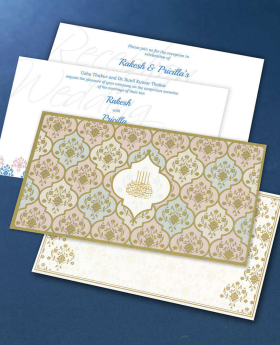
When one thinks of Muslim weddings, exquisitely designed Muslim Wedding Cards, vivid and joyful rituals, the fragrance of slow-cooked Biryani wafting in the air, and an atmosphere of regal splendour come to mind. However, in Islam, a wedding is more than just a celebration; it is a deeply spiritual occasion. In this blog, we delve into the intricacies of Muslim wedding traditions, offering a kaleidoscopic guide that encompasses regional cultures, rituals, customs, fashion, and more.
Welcome to the Serene Oasis of Muslim Weddings!
Wedding Functions
Magni
Similar to many other cultures, Muslim weddings commence with a Magni or engagement ceremony. It is a joyous gathering where the bride and groom exchange rings, and families exchange gifts of dry fruits, jewellery, and clothing.
Manjha (Haldi)
Equivalent to the Hindu Haldi function, the Manjha is an intimate home ceremony where the bride's female family members apply turmeric paste on her to enhance her bridal radiance. Accompanied by music, dance, and merriment, this ritual traditionally confines the bride to her home until the wedding day. The groom's home also hosts a separate Manjha function.
Sanchaq
Taking place a day or two before the wedding, the Sanchaq custom involves the groom's family visiting the bride's home and bearing gifts for her. These gifts include her bridal attire, jewellery, perfumes, and other tokens of affection.
Mehndi
Also occurring a day or two before the wedding, the Mehndi function is an intimate gathering organized by the bride's side. The bride's hands and feet are beautifully adorned with intricate henna designs while loved ones sing, dance, and celebrate. As a symbol of love, the groom's initials are often incorporated into the henna patterns.
Nikaah
The groom, arrives with a lively baraat and is welcomed by the bride's family, who offer sherbet to the groom and sprinkle rose water on his family members. The Nikaah ceremony, or the wedding itself, is officiated by a maulvi. Men and women are seated separately, with the groom and bride on either side of a curtain.
The Maulvi recites verses from the Quran, and the groom's family presents the bride with "Mehr," a mutually agreed-upon amount of money that symbolizes her consent to the marriage. The Maulvi then asks the bride three times if she accepts the marriage by saying, "Qubool Hai," and upon her affirmative response, he poses the same question to the groom. The couple signs the "Nikahnama," the official marriage contract, with two witnesses present from both families. Finally, they seek blessings from the elders of both families.
Arsi Mushaf
A unique custom in Muslim weddings, the Arsi Mushaf marks the first moment when the bride and groom set eyes on each other on their wedding day. After being separated by a curtain, they sit side by side with their heads covered by a veil, gazing at each other's reflection in a mirror placed before them alongside the Holy Quran.
Rukhsat
Similar to the Vidaai ceremony in Hindu weddings, the Rukhsat is the farewell ritual in which the bride bids an emotional goodbye to her family. Upon arrival at her new home with her groom, she is welcomed by the groom's mother, who presents her with the Holy Quran, bestowing blessings for her new life as a wife.
Walima
The Walima, the final function of a Muslim wedding, is a formal reception hosted by the groom's family in a grand and splendid manner. The couple is adorned in exquisite attire and showered with gifts and blessings by their families and guests. The evening is filled with joyous celebrations and delectable food.
Distinctive Elements of Muslim Weddings
While many Indian weddings share common cultural and ritualistic nuances, Muslim weddings possess certain quintessential moments that should not be missed.
Mehr
Unlike the dowries that were traditionally paid for by the bride's family (a practice that is now outdated), the Mehr is an essential formality in Muslim weddings. The groom's family presents an agreed-upon sum of money to the bride, symbolizing her acceptance of the marriage.
Gender Separation
Gender separation is an integral aspect of Muslim weddings, with men and women seated separately throughout the ceremony. Often, a curtain is drawn between the two groups. While this separation traditionally extends to the dinner as well, it ultimately depends on the couple and their families preferences.
Sumptuous Cuisine
The dinner at a Muslim wedding reception is a grand feast that encompasses rich meat dishes, aromatic rice preparations, delectable desserts, and much more. And let's not forget the universally loved Biryani, a compelling reason in itself to attend the wedding!
Vows
A distinctive feature of Muslim weddings is the recitation of marriage vows. Unlike Christian weddings, where couples express their vows to each other or Hindu weddings, where they chant mantras and verses, in Muslim weddings, couples primarily listen to the Maulvi, who speaks about their responsibilities and obligations to each other and to Allah.
Fashion Tips to Immerse in the Culture
Sharara and Gharara
The gracefully flared shararas and ghararas exude a regal Nawabi charm, making them ideal choices for Muslim weddings. Pair them with embellished tonal kurtas and dupattas for a modest and feminine look.
Ivory Intricacies
While vibrant colours are often favoured for auspicious occasions in Hindu ceremonies, soft and subdued ivory and cream palettes exude a divine aura in Muslim weddings. Opt for embroidered and embellished anarkalis, lehengas, or sarees adorned with pearl or polki jewellery for an ethereal appearance.
Charming Chikankari
Incorporate the elegant Lucknowi artistry of intricate Chikankari work into your wedding wardrobe. Pair any ensemble in soft hues with vintage jewellery and romantic makeup to achieve a regal look.
Bling it Up
No wedding is complete without a touch of sparkle. Elaborate shararas or shararas embellished with shimmering designs are sure to dazzle on this special day.
Modest Silhouettes
While a plethora of wedding fashion options is available, it is crucial to respect cultural norms when attending a Muslim celebration. Regardless of the attire you choose, it is wise to maintain modesty at Muslim weddings by avoiding deep necklines, cutouts, or revealing designs. Embrace the feminine allure of flowing and flared couture with exquisite details for an elegant and sophisticated look.
Conclusion
So that encapsulates our foray into the traditions of a Muslim wedding. We have a long history of being part of such celebrations through the Muslim wedding cards we provide; that is our contribution to your special day. So, the next time you attend a Muslim wedding, you will be well equipped with the knowledge from this article. Maybe look at the Muslim Wedding Card as well? You might see our contribution to the lovely affair!


Please complete your information below to login.
Sign In
Create New Account